

Sociologist Ray Oldenburg defined the third place as a social environment separate from home and work — a space for informal community life. Historically, coffee shops filled that role. For remote workers, however, the café has become a de facto office, a function it was never built to perform.
India’s remote workforce is among the fastest-growing in the Asia-Pacific region. As hybrid and fully-remote roles become permanent arrangements rather than temporary measures, placeless working — the uncomfortable middle ground between home, café, and office — is creating a new kind of professional dissatisfaction. Professionals are working longer hours but feeling less accomplished.
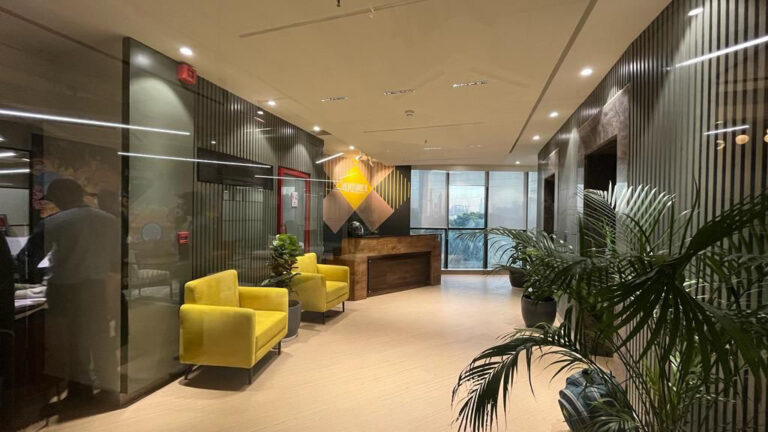
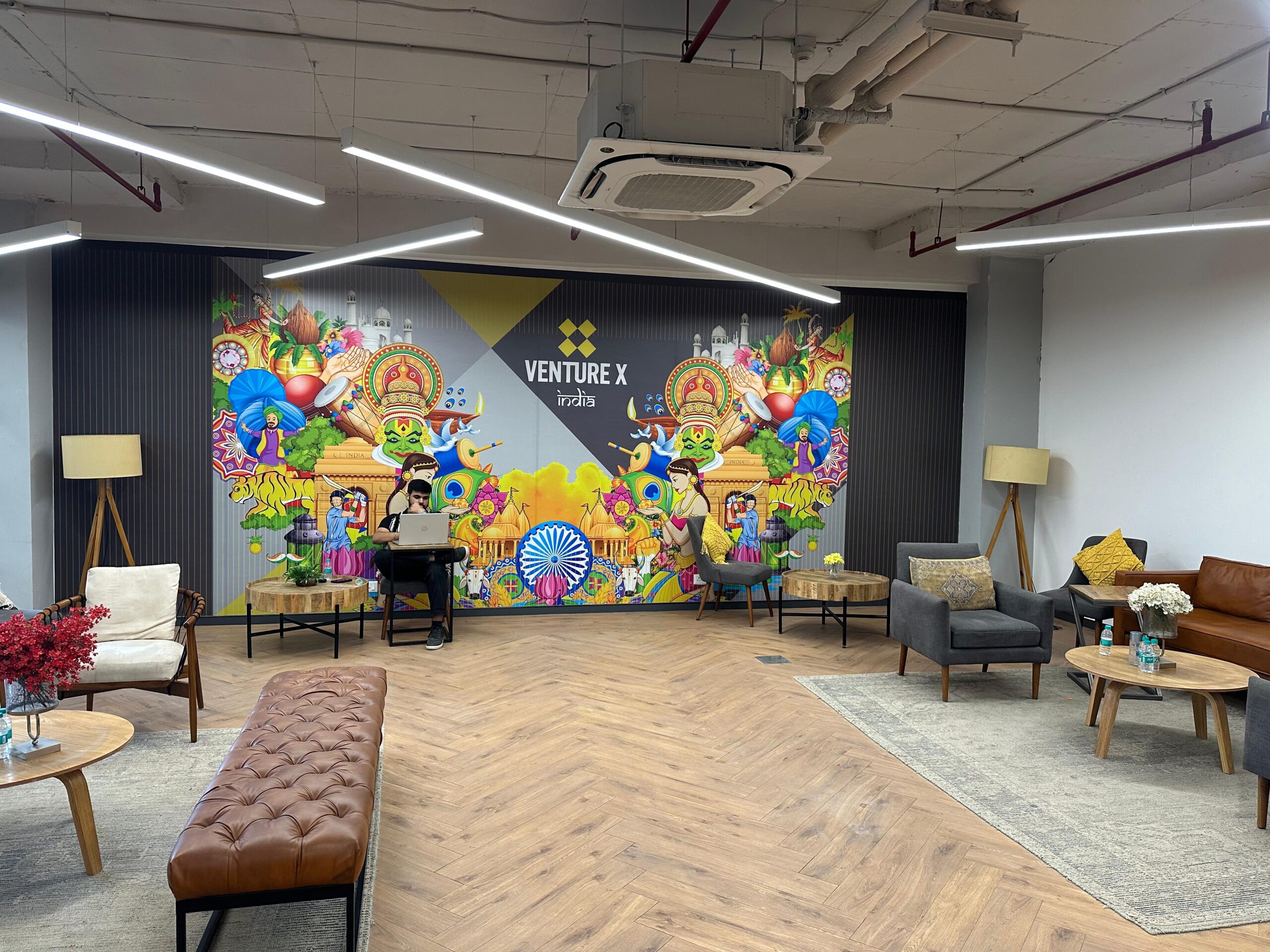
Venture X India exists precisely to close this gap: to provide a curated, professional third place that is engineered for output, not consumption. As you’ll see throughout this guide, the differences between a café and a purpose-built coworking space are significant — and measurable.
💡 Key Insight
The global coworking market is projected to surpass USD 40 billion by 2028 (source: Grand View Research). India is one of the top five contributing markets, with major metro cities driving demand.
Working from a café feels economical. In reality, when you account for daily spend, lost productivity, and the psychological cost of occupying a space you don’t own, the numbers tell a different story.
A typical remote worker at a café in an Indian metro city spends between ₹500 and ₹1,200 per day on beverages and food to comfortably justify their seat. Across a 20-working-day month, this totals ₹10,000–₹24,000 — often comparable to, or exceeding, a monthly coworking membership that includes unlimited coffee, high-speed internet, ergonomic seating, printing, and utilities.
☕ Working from a Café (Monthly)
Morning coffee × 20 days₹2,000–₹3,600
Midday snack/drink × 20 days₹3,000–₹5,400
Occasional lunch × 10 days₹3,000–₹8,000
Productivity lost (2 hrs/wk)₹4,000–₹12,000+
Estimated Total₹12,000–₹29,000
🏢 Venture X India Membership (Monthly)
Hot-desk or dedicated deskFlat monthly rate
Unlimited premium coffeeIncluded
High-speed fibre internetIncluded
Printing, scanning, utilitiesIncluded
Productivity lossMinimal
Explore flexible membership plans at Venture X India to find the tier that fits your work style and budget.

Many remote workers report a low-grade but persistent anxiety when working from cafés: the uncomfortable awareness that their single purchase no longer justifies their table. This customer guilt is a real cognitive burden that manifests in two ways. First, it triggers compulsive buying behaviour — buying a third coffee you don’t want just to feel legitimate. Second, and more critically, it breaks concentration at the worst possible moment: just as you begin to enter a state of deep focus.
Research in cognitive load and environmental distraction suggests that re-establishing focused concentration after an interruption can take up to 20 minutes. At a coworking space, the desk is yours by right of membership — no guilt, no interruption cycles, no hidden psychological tax.
⚠️ Note on Etiquette
“Laptop squatting” — occupying a café table for several hours on a minimal purchase — is widely considered poor etiquette. It reduces table turnover for a business whose revenue depends on rapid dining cycles, and it often creates an unwelcome atmosphere for staff and other patrons.
The table below summarises the core differences across the factors that matter most to remote professionals. Use this as a reference when evaluating your own workspace needs.
Factor | ☕ Coffee Shop | 🏢 Coworking Space (e.g., Venture X India) |
Monthly cost transparency | Variable; can reach ₹12,000–₹24,000+ | ✔ Fixed, predictable monthly fee |
Internet reliability | ✘ Shared, consumer-grade, often throttled | ✔ Enterprise-grade fibre; often with failover backup |
Power availability | ✘ Limited; outlet hunting is common | ✔ Power at every seat, integrated into furniture |
Ergonomic seating | ✘ Designed for 30 min, not 8-hour workdays | ✔ Professional chairs with lumbar support; standing desks available |
Cybersecurity | ✘ Typically unencrypted public Wi-Fi | ✔ Secured networks; premium spaces offer per-member credentials |
Noise control | ✘ Unpredictable (machines, music, crowds) | ✔ Acoustic management; dedicated quiet zones |
Private call space | ✘ None; public environment only | ✔ Soundproof phone booths and meeting rooms |
Professional address | ✘ Not available | ✔ Available via virtual office packages |
Client meeting space | ~ Informal café booth only | ✔ Private boardrooms with AV equipment |
Networking opportunities | ~ Occasional; largely transient crowd | ✔ Curated professional community; organised events |
Tax deductibility (India) | ✘ Very difficult; classified as meals | ✔ Straightforward business overhead (freelancers/businesses) |
Customer guilt | ✘ High; continuous purchase pressure | ✔ None; space is yours by membership |
The rise of niche coworking is among the most notable coworking space trends. No longer is “one-size-fits-all” the default. We’re now seeing the emergence of industry-specific coworking models tailored for professionals in legal services, healthcare tech, design, fintech, and more.
For example:
Legal coworking hubs provide confidentiality-compliant meeting rooms and secure data storage.
Healthtech coworking offers bio-tech labs and proximity to regulatory consulting.
Creative and design-oriented coworking spaces come equipped with editing suites, studios, and client showcase areas.
These startup coworking space models combine focused infrastructure with highly relevant communities, boosting productivity and collaboration.

A modern professional is only as productive as their connection. Coffee shops provide internet as a courtesy for diners; coworking spaces provide it as a core deliverable.
In a crowded café, dozens of users share a single consumer-grade router. This causes bandwidth congestion that makes tasks like video conferencing, uploading large files to cloud storage, or attending live webinars unreliable. Download speeds may look acceptable, but upload performance — the bandwidth that matters most for Zoom calls and file submissions — is often severely throttled.
Premium coworking spaces invest in high-speed, enterprise-grade connectivity suitable for demanding professional tasks including video conferencing and large file transfers. Importantly, many spaces also maintain redundant connections — if one line goes down, a secondary link activates automatically. Learn more about premium business amenities at Venture X India.
The “outlet hunt” is a real source of logistical stress: arriving at a café only to find every socket occupied, then watching your battery drain while sitting in a dimly lit corner. This creates a scarcity mindset — a low-level anxiety that quietly erodes focus before your workday has even begun.
At a professionally designed coworking hub, power is integrated into the furniture at every seat. Whether you’re at a hot desk, a dedicated desk, or a lounge chair, charging is never a concern.
30%
of remote workers cite unreliable Wi-Fi as their top work-from-café frustration
20 min
average time to re-enter deep focus after a distraction or interruption
2 hrs
weekly productivity loss from tech glitches and environment-hopping at cafés
The popular belief that café “white noise” boosts creativity has some nuance. Research in environmental psychology and cognitive concentration shows that consistent low-level ambient sound can be moderately helpful — but that unpredictable, high-variance noise (like a steam wand, a dropped tray, or a sudden loud conversation) acts as a cognitive interrupt that is particularly difficult for the brain to filter out.
Café noise is characterised by sharp, unpredictable spikes — the hallmarks of what researchers call “accidental distractions.” Coworking spaces address this directly through acoustic management: sound-absorbing panels, intentional spatial layouts, and dedicated quiet zones where phone calls are prohibited and the ambient sound level is maintained at a consistent, low hum optimal for focused work such as coding, writing, or deep analysis.
One of the most underrated productivity features of a purpose-built coworking space is the ability to physically move based on your cognitive task.
Browse dedicated desks and private offices at Venture X India to find the format that suits your working style.
Physical environment shapes cognitive state. A workspace designed around your work type — not around beverage consumption — is one of the most effective and underutilised productivity tools available to remote workers.
As a remote worker or business owner, your visible environment is an extension of your professional brand — whether you’re on a Zoom call or welcoming a client in person.
When background noise disrupts a client call, it communicates something unintended: that your workspace is improvised and uncontrolled. This matters most during high-stakes interactions — sales presentations, job interviews, investor calls, or sensitive client consultations.
At a coworking space, you have consistent access to a state-of-the-art meeting room or soundproof booth with professional lighting, clean visual backgrounds, and clear audio. The difference in perceived credibility is immediate and measurable.
Meeting a client in a café is informal by nature. There’s no privacy, conversations are frequently interrupted, and the setting sends a subtle signal that your business lacks a permanent base. In contrast, meeting in a professional, glass-walled boardroom with HD display screens and a polished lobby entrance communicates stability and seriousness.
Beyond meetings, a virtual office solution through Venture X India provides your business with a professional corporate address, mail handling, and reception services — without committing to a full-time private office lease.
📌 Brand Perception Tip
A registered business address at a recognised commercial location rather than a residential address significantly increases perceived credibility with enterprise clients, banks, and regulatory bodies.
Café furniture is designed for high-turnover dining — optimised for roughly 30 to 45 minutes of comfort, not eight-hour workdays. Spending extended periods in a fixed forward-leaning posture over a low café table contributes to cervical strain, lumbar issues, and repetitive wrist injuries over time.
Coworking spaces prioritise the human factor. Professional facilities offer ergonomic chairs with lumbar adjustment, and many provide height-adjustable standing desks and dual-monitor setups. However, it’s worth noting that the ergonomic benefit is only realised when the adjustable features are actively used — a well-designed chair requires conscious setup to deliver proper support. According to guidance from workplace ergonomics and long-term health resources, proper lumbar support and monitor positioning are among the most impactful interventions for preventing chronic musculoskeletal complaints in knowledge workers.
Learn more about human-centric design at Venture X India.
Public café Wi-Fi networks are often unencrypted and highly vulnerable to a class of attack known as a Man-in-the-Middle (MitM) attack, in which a malicious actor intercepts the data travelling between your device and the network router. Passwords, financial credentials, and confidential client data can all be exposed on an unsecured network with relatively basic tools.
Understanding the security risks of public Wi-Fi networks is essential for any professional handling sensitive data. Premium coworking spaces take this seriously: networks are secured, and many high-end facilities assign unique per-member login credentials rather than using shared passwords. Always verify the specific security protocols of any coworking space you consider — the industry standard varies across providers and tiers.
Security Factor | ☕ Café Wi-Fi | 🏢 Premium Coworking |
Network encryption | ✘ Often unencrypted or WPA2-Personal (shared password) | ✔ Secured networks; premium spaces: unique member credentials |
Risk of MitM attack | ✘ High on public, unmonitored networks | ✔ Significantly reduced on managed networks |
Data isolation | ✘ No isolation from other users on network | ~ Private VLANs available at enterprise-tier spaces |
Recommended precaution | Always use a VPN on café networks | Confirm encryption standard before connecting |
The people around you at work shape your opportunities, your thinking, and your energy. This is one of the most significant — and most overlooked — differences between a café and a coworking space.
In a café, the crowd is transient and unpredictable — students, tourists, families, and the occasional remote worker. There is no shared professional context, and most people are there for personal reasons. Approaching someone for a conversation about work is contextually awkward.
In a coworking space, everyone is there to work. There is an implicit shared purpose that makes professional conversation natural. A casual exchange at the coffee bar can lead to a referral, a collaboration, or a solution to a problem you’ve been stuck on for days. Community managers at spaces like Venture X India actively facilitate introductions and host professional networking events and member workshops — making community a built-in feature of your membership, not a happy accident.
Chronic blurring of home and work environments is a well-documented contributor to remote worker burnout. When you work where you eat, relax, and sleep, the brain never fully decompresses. The absence of physical transitions — commuting in, commuting out — removes the natural signals that help the mind switch between modes.
Choosing a dedicated workspace creates a powerful psychological boundary. The act of arriving at a professional space activates “work mode.” Leaving at the end of the day signals its close. This structural discipline improves both work quality during the day and quality of rest and personal life in the evenings.
For many remote workers and business owners, a coworking membership can represent a significant and legitimate business expense — but the rules matter.
⚠️ Important Disclaimer: Tax deductibility depends entirely on your employment and business structure. In India, freelancers, sole proprietors, and GST-registered businesses can typically claim coworking fees as a legitimate business overhead (office rent) expense. Salaried employees generally cannot deduct this cost from their personal income tax. This guide provides general information only — please consult a qualified tax professional or chartered accountant for advice specific to your situation.
From an administrative perspective, a single monthly invoice from your coworking provider is far cleaner for accounting and audit purposes than a collection of individual café receipts. Tax authorities in India are generally sceptical of meal and entertainment claims, but view “office rent” as a straightforward operational cost. Learn more about tax-deductible business expenses in India via the official Income Tax portal.
When evaluating membership cost, most people consider the desk price alone. The full picture includes the value of everything bundled into that fee:
Amenity | Included in Membership | Equivalent Standalone Cost |
High-speed internet | ✔ Included | ₹1,500–₹3,000/mo (home fibre) |
Premium coffee (daily) | ✔ Unlimited | ₹3,000–₹6,000/mo (café purchases) |
Printing & scanning | ✔ Included | ₹500–₹1,500/mo (home printer + ink) |
Professional mailing address | ✔ Included (select plans) | ₹1,200–₹3,000/mo (PO Box or virtual office) |
Meeting room access | ~ Included (limited hours, select plans) | ₹500–₹2,000/hr (standalone hire) |
Ergonomic furniture | ✔ Included | ₹15,000–₹40,000 (one-time purchase) |
Air conditioning & utilities | ✔ Included | ₹1,500–₹4,000/mo (home utility increase) |
Many memberships also provide access to the wider Venture X network, allowing members to work from partner locations in other cities when travelling — a valuable perk for India’s growing class of professional nomads.
The choice between a coffee shop and a coworking space is ultimately a choice about how seriously you take your career. The café will always have its place — for a quick email check, a casual client meet-up, or a change of scenery on a slow afternoon. But it is not a sustainable foundation for high-output professional work.
The infrastructure, security, community, and professional environment offered by a dedicated workspace like Venture X India eliminate the hidden costs of distraction, ergonomic strain, and unreliable technology — freeing your mental energy for what actually matters: your work, your clients, and your growth.
Choosing a professional environment is a signal: to yourself, to your clients, and to your professional network, that you are a serious operator with a serious base of operations.
Coffee shops appear to be the budget option, but the cumulative cost of daily purchases to “justify your seat” often reaches ₹10,000–₹24,000 per month. A coworking membership is often comparable in cost and delivers significantly more in return: reliable internet, ergonomic furniture, printing, premium coffee, and productive working conditions — without the hidden cost of lost billable hours.
Cafés introduce unpredictable, high-variance noise — the type most disruptive to sustained concentration. They also create customer guilt cycles that break focus at critical moments. Coworking spaces use acoustic management, quiet zones, and varied work environments to support deep focus and task-appropriate mindsets. The physical distinction between work and non-work zones also helps mental delineation.
Generally, yes — particularly at premium providers. Public café Wi-Fi is typically unencrypted and vulnerable to interception. Premium coworking spaces use secured networks; the most advanced provide unique login credentials per member. That said, security standards vary across providers and price tiers, so it’s worth confirming the specific protocols before connecting to any network with sensitive work.
For freelancers, consultants, sole proprietors, and GST-registered businesses, yes — a coworking membership is generally claimable as a business overhead expense. Salaried employees typically cannot deduct this cost. Always consult a chartered accountant for personalised tax advice specific to your income structure and business registration.

Have questions? We’re here to help you find your perfect workspace at Venture X India. Drop us your details and we’ll get back to you shortly!