

Ask a few founders what hurt them most in the first two years and you’ll hear the same story in different clothes. Money ran out sooner than planned. Or it went into something that couldn’t be undone.
There are a lot of startups in India now, and you feel it everywhere. A decent developer takes longer to hire and costs more than last year. Your customers have already sat through several pitches that sound like yours. Office rent in any big city only goes one direction. Most early teams are working with limited capital, and plenty of people are waiting for a share of it: employees, landlords, ad platforms, the tax department.
We tend to talk about growth as a revenue story. Sales go up, someone posts the chart, everyone feels good. But a company can double its sales and still end the year closer to zero, if costs grew faster than income. The startup growth strategies in India that survive past year three usually rest on something unexciting. The founder knows how much cash is left, how quickly it’s going, and what a new commitment will do to both.
This article covers two areas where founders often trip. The first is financial planning. The second is workspace, which for many small companies is one of the three biggest costs and the hardest to reverse. My argument is simple: let your cash, your team size and your actual goals set the pace. What the startup down the road is doing shouldn’t come into it.

Sort your spending into two piles. In the first go salaries, rent, the accountant and most software plans. These show up every month whether or not you sold anything. In the second go ad spend, cloud usage, support load and sales commissions, which rise and fall with activity. The bigger the first pile, the less room you have when a client pays 60 days late. And they do.
A new hire costs more than the number on the offer letter. There’s the recruiter’s fee, or the weeks you spent interviewing. There’s a laptop, a few software seats, and a month or two before the person is properly useful.
The office rent is only one part of the cost. There’s the security deposit, furniture, fit-out, internet bill, and sometimes a maintenance fee you hear about only after the site visit. GST filings and audits add to the expense, along with that system upgrade you kept delaying and the support tool you buy when you can no longer keep up with emails.
A three-year lease signed in month six is a three-year promise based on six months of information. If revenue stalls, the lease keeps going. Which is why startup cost management matters most before the money leaves your account, while saying no is still free
Take a 10-person startup in a metro city. These figures are my assumptions, not market averages.
Monthly cost | Amount (₹) |
Salaries (10 people) | 6,50,000 |
Rent, utilities, internet | 1,40,000 |
Marketing | 1,00,000 |
Software subscriptions | 45,000 |
Accounting and compliance | 25,000 |
Travel, pantry, miscellaneous | 40,000 |
Total | 10,00,000 |
Salaries are 65% of the bill. Add rent and utilities and you’re at 79%. If sales dip next month, almost none of that can be cut quickly. Marketing and miscellaneous are the only “expenses” you can cut in a hurry, and squeezing marketing means fewer customers a quarter from now.
Write down what you expect to earn each month and what you expect to spend. Mark every cost as either “the business stops without this” or “nice to have”. Then be gloomy about revenue. A plan that assumes every invoice gets paid on the due date is a hope, not startup budgeting.
Monthly burn rate is how much cash you lose in a month. Financial runway is how long you can last at that pace: the cash you have, divided by net burn.
Use the startup above. Say it has ₹60 lakh in the bank and brings in ₹4 lakh a month. Net burn is ₹6 lakh, so runway is ten months. Now knock revenue down by a quarter. Burn rises to ₹7 lakh and runway shrinks to about eight and a half months. A modest sales dip just cost almost six weeks of life. Do this sum every month, and always run the pessimistic version next to the optimistic one. If I had to pick one habit for startup cash flow management, this would be it.
With climate consciousness at the forefront, the future of coworking spaces will be increasingly green. Expect:
LEED-certified buildings
Natural lighting and ventilation designs
Recycled furnishings
Plastic-free, energy-efficient operations
These coworking advantages go beyond aesthetics — they align businesses with eco-conscious values and help reduce operational costs. As sustainability becomes a deciding factor for employees and investors, eco-friendly coworking spaces are turning into a key differentiator.
Set a few conditions before you hire someone or expand the business. Keep customer acquisition cost below a figure you can afford. Make sure gross margin stays above a certain level, or that recurring revenue can cover the next hire’s salary for a year.
Write it down in advance. Excitement is a poor decision-maker on a Friday afternoon.
Once a month, go through every line item. Cancel the software nobody opened. Check what renewed automatically. Notice the task someone is still doing by hand that a cheap tool could handle. It takes an hour or two and nearly always saves more than it costs.
The takeaway: plan expansion around the cash you actually have and what happens if sales disappoint, not only around the growth you’re projecting.

A leased office is yours to arrange as you please. You can choose the “layout”, put up your company sign and decide when to open. But the “rent agreement” may lock you in for years, the deposit stays tied up, and furniture and repairs cost extra. Many commercial leases include lock-in periods too. If the team doubles or halves, the space doesn’t care.
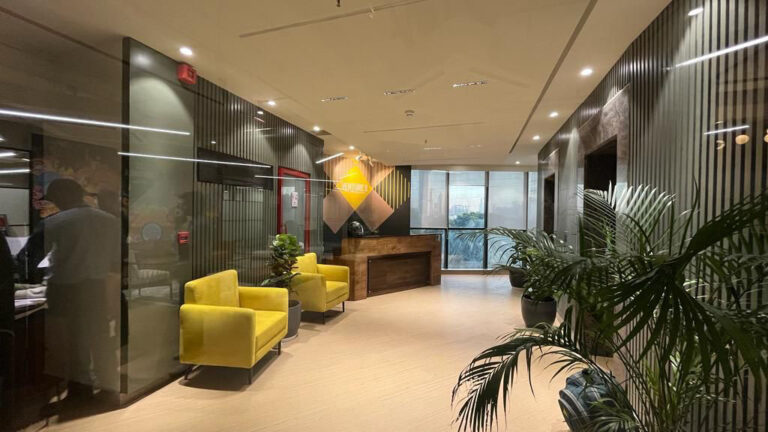
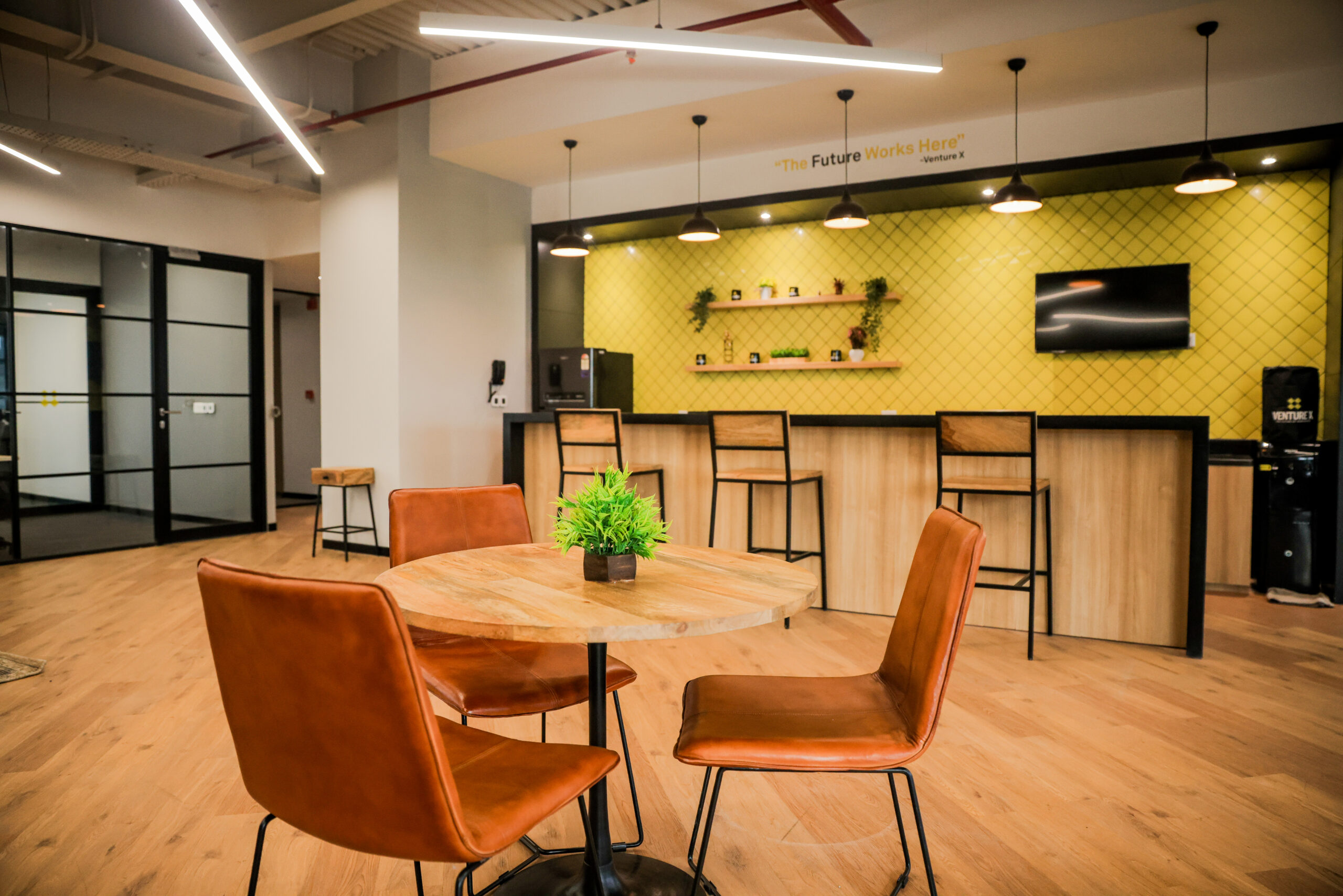
In India, “coworking spaces” offer everything from a shared hot desk to a private office with a lock on the door. Most arrive furnished, with internet, reception, cleaning and meeting rooms included, on shorter contracts and smaller deposits. For many early teams, flexible workspaces for startups are less about saving money and more about not tying it up.
Monthly rent alone will mislead you. Line up these items for each option:
A remote-first team that meets once a fortnight may need nothing more than a room booked by the hour. A small team that wants somewhere respectable to host clients can do well in a serviced shared office space. A bigger, settled team that cares about controlling its environment will often come out ahead with a lease.
Take an 8-person startup in a metro city. Every number below is my assumption. Get real quotes before relying on any of it.
Traditional lease | Serviced private office | |
Monthly cost | ₹95,000 (rent + maintenance) | ₹1,12,000 (all-inclusive) |
Refundable deposit | ₹4,20,000 | ₹2,24,000 |
Setup and furnishing | ₹4,00,000 | Close to nil |
Year-one spend, excluding deposit | ₹15,40,000 | ₹13,44,000 |
In year one, the serviced office costs about ₹2 lakh less and locks up about ₹2 lakh less in deposit. But the lease is ₹17,000 cheaper every month, so the ₹4 lakh setup bill takes roughly two years to earn back. If the team will stay about this size for longer than that, office lease costs favour the lease. If your team size may change within “six months”, a serviced office may be worth the extra cost.
When desks, internet and a meeting room already work on day one, you save more than money. Nobody has to chase a furniture vendor or wait three weeks for a broadband technician.
A proper business address helps as well. Meeting a client or a possible partner in a real meeting room beats a café with a loud coffee machine. For a young company nobody has heard of, the setting does a little of the talking.
You might end up working near “founders”, “freelancers”, “designers”, or “lawyers” at a coworking space. One of them could introduce you to someone useful, recommend an accountant or even take up work as your first contractor. Don’t count on it. Sharing a floor doesn’t produce customers or investors, and plenty of people sit near each other for a year without exchanging a word. Treat networking as a bonus if it happens.
A full-time office can be a waste when “half” the team works from home. Lot of co-working spaces let you “add desks” when the team grows and “drop” them when you need less space.
Idea and pre-seed. Keep fixed costs close to zero. Work remotely, book a room when you must meet someone, or rent a shared desk. You don’t need an office to find out whether anybody wants your product.
Early traction and seed. Five to ten people can work well in a private cabin or small suite. Before you sign up, look at your hiring plans and cash in hand. You don’t want to pay a “penalty” just because the team outgrows the space, right?
Expansion. Now where your people live matters, along with how they travel and how much the work depends on being together. Compare a flexible contract against a conventional lease again, using today’s numbers rather than last year’s.
Established operations. Bigger companies usually end up with a mix — a main office for the core team, with flexible office solutions in other cities or for overflow. At this stage, “workspace utilization” and “long-term costs” deserve a proper review, along with what happens to operations if one site goes down.
## Note that no single workspace is best — rather — it depends on your team size, your business model, your city and how much cash you can safely commit.
Hire first for “roles” that touch the product, the customer or revenue. A second operations manager can wait. A salesperson who closes deals can’t.
Build the hiring plan on a forecast you believe. Hiring before the work is there means paying salaries for months without enough return. Spreading new hires across a few quarters can save more money than most founders expect.
You don’t need a full-time employee for every role. A part-time contractor can take care of design or bookkeeping, while an agency may be enough for a one-off project. Some jobs do need a permanent hire, though. That balance changes as the business grows.
Think about space too. Will the new person fit in the current office? What’s their commute? Two hours each way eats energy and goodwill faster than most founders realise.
And judge people by what they deliver. Clear goals and regular check-ins tell you far more than who’s still at their desk at 6 p.m.
Accounting and budgeting software “saves time” on manual entries and helps you get your figures sooner. Some tools sort expenses and estimate future cash needs. Even a basic “app” that shows your balance and upcoming bills can be more useful than a spreadsheet you update once a month.
Communication and project tools help when the team works from “different places”. Desk and room booking apps also help when people don’t have a fixed seat.
You can check how much the office is actually used. If you pay for “six desks” but only two are occupied most days, you may be paying for space you don’t need. Go through your software subscriptions every few months — plus drop the ones you barely use.
These “three examples” are made up to show how the numbers might work, using the assumptions given. They don’t describe any real company. For actual cases — check company announcements or reports from trusted business news sources. Malik Times reports on startup funding and business news and is one place to start. Check any figure before you lean on it.
Now imagine a “four-person” software company with ₹12 lakh in the bank. Revenue is ₹2.5 lakh a month and spending, before workspace, is ₹4 lakh. Net burn is ₹1.5 lakh, so there are eight months of runway.
The founder looks at three options. Working from home with hourly meeting rooms adds about “₹6,000”/month and trims runway to roughly 7.7 months. Four coworking desks at “₹36,000”/month bring it down to about 6.5/months. A small leased office at ₹55,000 a month, plus ₹4.2 lakh for deposit and setup, leaves ₹7.8 lakh in the bank and under four months of runway.
She picks the home option for now, since two teammates live nearby and meet twice a week. The desks would cost about a month and a half of runway for benefits she can’t measure yet. She sets a trigger: move into desks once monthly revenue passes ₹4 lakh.
Now imagine a company that has closed a seed round and plans to go from 14 to 24 people over a year. It’s choosing between a 24-seat private lease and a flexible suite that adds seats as it hires.
At “₹2.2 lakh”/month, the lease works out to about “₹9,200” per seat. If hiring slips a quarter and six seats sit empty, that’s roughly “₹55,000”/month for nothing. The flexible suite costs more per seat but removes that risk. While hiring plans are still up in the air, the extra cost may be worth it. Once the team size is more settled, compare lease prices again.
You should check “workspace costs” during your quarterly finance review. In the spreadsheet, keep confirmed figures separate from what you expect to spend.
Before you commit to a workspace or any expansion, ask yourself:
Revenue gets the attention, but the startups that last usually watched their cash as closely as their sales. They knew their burn, tested their assumptions, and held off on commitments they couldn’t easily undo.
A flexible workspace can spare some businesses heavy setup costs and long contracts. It won’t suit everyone, and a stable team planning to stay put for years may well pay less with a lease. What matters is that the decision comes from your own numbers.
So build the habit. Look at your expenses every month, compare your assumptions with what really happened, and scale when the business can carry it. If the numbers aren’t there yet, wait a quarter. Waiting rarely sinks a company. Overcommitting sometimes does.
Yes. With hybrid work models dominating post-pandemic, coworking provides flexibility, cost savings, and access to community-driven growth. It’s increasingly seen as the future of workspace across industries.
Lower costs, zero setup hassles, faster scaling, and valuable networking make co-working spaces for startups an ideal choice.
The coworking space industry is rapidly expanding, especially in Asia. Trends include industry-specific hubs, green design, and AI-powered services.
Some leading names include Venture X India, WeWork, 91Springboard, Awfis, and Innov8 — each offering best flexible office space brands with localized amenities.